Gear Checklists
An upland hunting gear checklist
Upland gear is a walking kit with safety rules written into it. Blaze orange to the state’s letter, boots that survive the third mile, and a vest that carries shells, water and birds. The checklist below runs in a parking lot, with typical price bands attached.
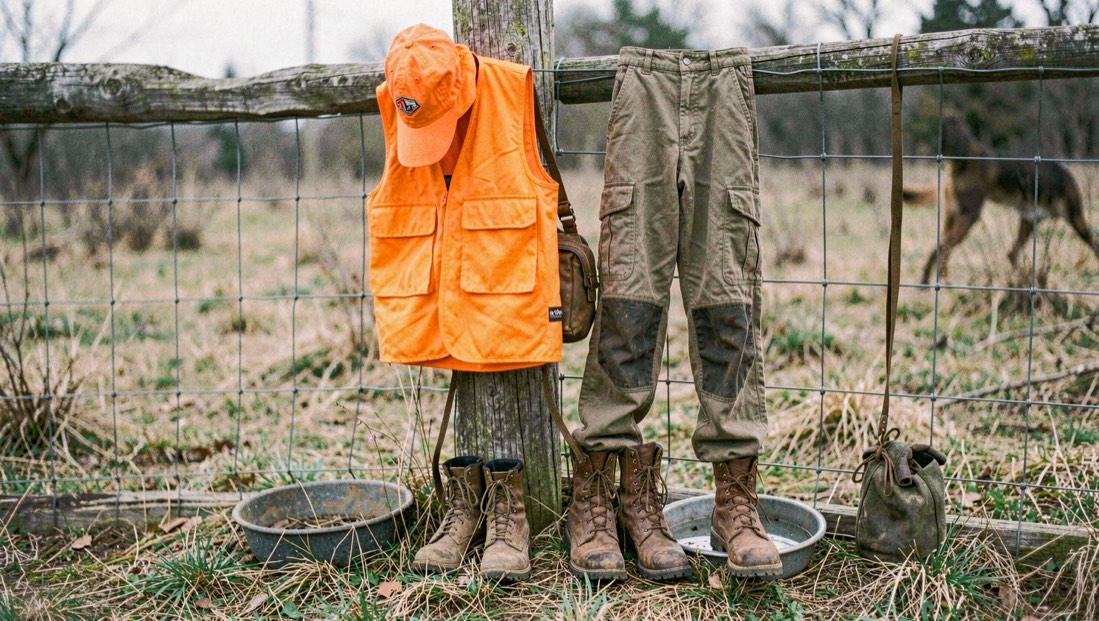
Upland hunting is the simplest gear sport in this journal and the easiest to overcomplicate. A walk in heavy cover, a shotgun you can swing all morning, orange the law can see, and boots that still like you at mile four: that is the sport. Everything else is convenience. This checklist is ordered the way a season actually asks for things, with the safety items first because several states write them into regulation, and with typical retail bands so the budget decides before the catalogue does.
Blaze orange: the requirement before the requirement
Most states that have an upland season also have an orange rule, commonly expressed as a cap plus a vest or jacket totaling a set area of blaze material, 400 square inches being a figure many frameworks use. Whatever your booklet says, treat the rule as the floor, not the target. Early season woods are shared with small game hunters, ranchers and the occasional lost birder, and the point of orange is to be identified instantly from any angle. A solid blaze cap and a blaze vest are the standard answer; the season calendar page pairs with this habit, because opening weekends are precisely when the fields are busiest.
Feet first: the boots and the legwear
The honest center of the kit is footwear. Upland walking is miles of uneven ground, dew at the start and dust by noon, and the common failure is not gear failure but foot failure on week three. Leather or modern synthetic boots with ankle support, broken in before the opener, typically run 150 to 300 dollars and are worth every cent. Brush pants or chaps protect against the multi flora rose and barbed wire that write the landscape, usually 60 to 120 dollars. Socks are a system, not an afterthought: one spare pair in the truck changes whole afternoons.
The gun, the shells, the chokes
Any reliable 20 or 12 gauge, or a 28 or 16 if that is your tradition, outshoots its price tag. What matters is gun fit and shells matched to the bird: open chokes, improved or modified, for grouse and woodcock in tight cover, slightly tighter for late season pheasant in open ground. Carry shells in a vest or shell bag that balances at the waist, and count what is left the way you count dog water. Ammunition is a consumable, priced per box, and practice boxes count as gear: a round of clays before the season is equipment, per the small game primer’s argument that repetition is the real teacher.
| Item | Purpose | Typical band |
|---|---|---|
| Blaze cap and vest | Visibility, legal floor and margin | About 40 to 100 dollars combined |
| Boots, broken in | The whole day lives in them | About 150 to 300 dollars |
| Brush pants or chaps | Thorn and wire insurance | About 60 to 120 dollars |
| Shell bag or vest | Carries shells, water, birds | About 40 to 150 dollars |
| Water for dog and hunter | Non negotiable on warm openers | About 10 to 30 dollars |
| Game bag or strap | Respectful carry, clean feathers | About 15 to 50 dollars |
For those who hunt behind a dog
A dog converts the checklist by one page. Water and a bowl ride always, a first aid kit sized for pads and not just people, a whistle that works at distance, lead and stakeout for the truck hours, and in bird country a means of handling the harvest cleanly. None of it is exotic; all of it is the dog’s half of the deal. The dog’s season conditioning is gear too, and it follows the same logic as the deer timeline: build the legs months before the opener, not during it.
The parking lot checklist
- Blaze worn to the booklet’s letter, cap plus vest as the working floor.
- License, stamps and any permits in the vest, checked at the truck.
- Boots laced, socks spare, brush pants on before the walk begins.
- Shells counted, chokes chosen for the cover being walked.
- Water, bowl and a plan for the birds and the heat decided in advance.
Mistakes the third mile exposes
New boots on opening day, which writes the day in blisters. Orange treated as a suggestion, which risks the worst conversation in the sport. Vest weight carried high on the shoulders instead of at the waist, which is why mile three feels like mile eight. Water forgotten on a warm opener, for dog or hunter. And the paperwork miss, since stamps and permits ride along on some birds, per the licenses page. Every one of these is retired in a parking lot in four minutes, which is exactly when this checklist is meant to be run.
The decision, plainly
Start with orange, boots and brush pants, add the bag and water, and buy nothing else until the third hunt tells you what the first three lacked. The kit that lives in the truck all season beats the kit assembled twice a year, and it costs less than the catalogue implies: the whole working list above prices out, in typical bands, for less than many single item upgrades on other sports. Walk far, shoot honestly at honest ranges, and let the small game seasons and the calendar guide carry the dates.